The Accidental Entrepreneur
Life often takes unexpected turns that lead to incredible outcomes.
For Kainaz Messman Harchandrai, Theobroma was never part of a grand business plan but rather a fortunate twist of fate.
Growing up in a home where baking was a cherished tradition, Kainaz and her sister Tina developed an early love for the craft. After honing her skills at Le Cordon Bleu in London, Kainaz landed her dream job as a pastry chef at Oberoi Udaivilas in Udaipur. However, a serious back injury in 2003 forced her to rethink her career. During her recovery, her father Farokh and sister Tina toyed with the idea of opening a small bakery.
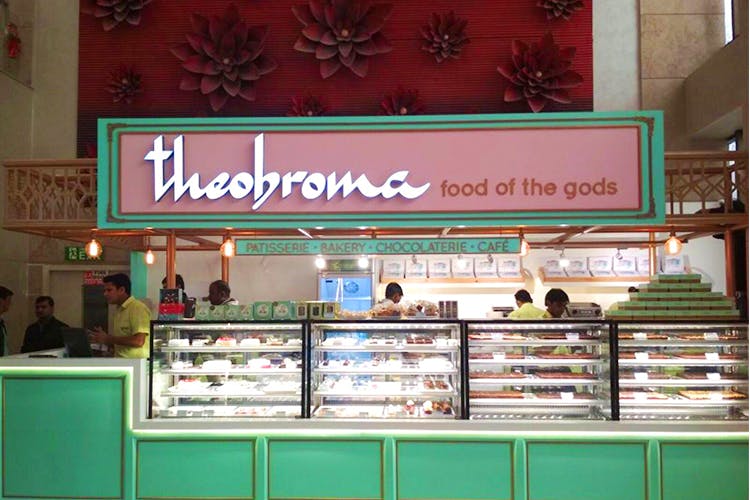
In 2004, at just 24 years old, Kainaz took the plunge, investing ₹1.5 crore in their first store at Colaba Causeway, Mumbai. The location, near their grandmother’s home, ensured convenience and high footfall. Challenges were aplenty, from designing an efficient layout in a compact space to finalizing a name. A friend suggested “Theobroma,” Greek for “food of the gods.” Though initially difficult for customers to pronounce, its uniqueness soon became a brand asset.
Mumbai’s Artisanal Bakery Pioneer
When Theobroma launched in 2004, premium European-style desserts were a rarity in India. The market was dominated by either five-star hotels or small local bakeries that often compromised on quality. Theobroma sought to bridge this gap by offering gourmet products made with high-quality ingredients like Belgian chocolate and real butter, at accessible price points.
One of its biggest contributions was popularizing brownies—now a staple in most dessert menus but relatively unknown in early 2000s India. Its signature offerings, including the chocolate chip brownie, truffle cake, and mawa cake, quickly gained a loyal following. By 2008, Theobroma was not just a bakery but a trendsetter in Mumbai’s evolving food culture.
Growth, Expansion, and Funding Struggles
For six years, the Messman family ran Theobroma as a single-outlet business, gradually building a devoted customer base. Encouraged by rising demand, Tina and Farokh spearheaded expansion efforts. However, funding remained a major hurdle. In 2014, the founders secured a ₹5 crore business loan, allowing them to open additional outlets.
Despite growing popularity, Theobroma faced intense competition from both legacy bakeries and new entrants. Maintaining product quality, innovating menu offerings, and managing operational challenges required constant effort. By 2015, the brand had established a strong foothold among young urban consumers and families seeking high-quality desserts for celebrations.
The Gourmet Revolution & Digital Shift
Between 2016 and 2017, India’s bakery sector saw rapid growth due to urbanization, evolving consumer preferences, and the rise of food delivery platforms like Swiggy and Zomato. Recognizing this shift, Theobroma expanded beyond Mumbai, opening stores in Delhi-NCR. Its products resonated well with young professionals, families, and expatriates who appreciated international-quality baked goods.
To further fuel growth, Theobroma raised ₹120 crore from ICICI Ventures between 2017 and 2019, with ICICI acquiring a 46% stake. The investment was primarily allocated to store expansion and operational enhancements. By 2020, the brand had 50 outlets across Mumbai, Delhi, and Pune, serving over 500,000 customers.
The COVID-19 pandemic posed an unprecedented challenge. With in-store sales plummeting, Theobroma pivoted swiftly to online delivery, ensuring high-quality packaging and a seamless ordering experience. This adaptation strengthened its presence in the digital space and reinforced brand loyalty.
A National Sensation
By 2022, Theobroma had over 100 outlets, expanding into Chennai, Bengaluru, and Tier-II cities like Raipur. The brand developed a robust location strategy, analyzing demographics, footfall, and purchasing behavior to optimize store placements. A professional management team was brought in to scale operations efficiently, balancing store expansion with menu diversification.
Beyond desserts, Theobroma introduced savory items, beverages, and breakfast options, increasing its appeal as an all-day dining destination. Targeted digital marketing, influencer collaborations, and social media engagement further amplified brand reach.
The Path to Global Expansion
The Indian bakery market, valued at $11 billion in 2023, is projected to grow at an 11% CAGR, reaching $20 billion by 2028. Rising disposable incomes, shifting lifestyle preferences, and growing demand for premium products position Theobroma for continued success.
Despite biscuits and chocolates dominating the segment, cakes and pastries—Theobroma’s forte—constitute a growing 11% share. While organized players currently hold 30% of the market, Theobroma is well-placed to capture a larger slice by expanding into newer cities and leveraging its brand strength.
With strategic expansion, digital innovation, and a strong customer base, Theobroma is poised to transform from a beloved Indian bakery into a formidable global brand. Whether it can replicate its domestic success internationally remains to be seen, but one thing is certain—the food of the gods is ready for a bigger stage.

 dissectvc.com