A Strong Debut
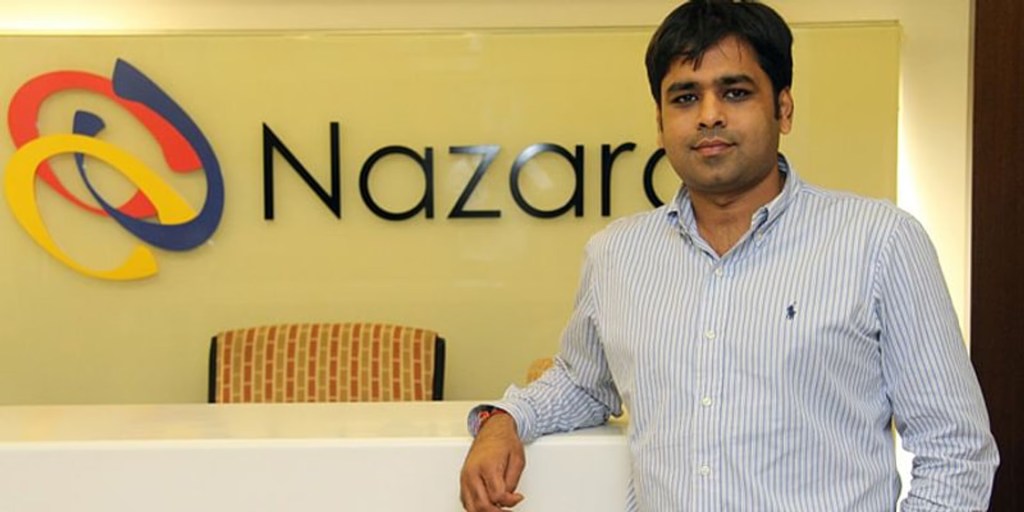
Nazara Technologies created waves with its IPO, which was oversubscribed by 175 times. This marked a key milestone for Indian tech IPOs, positioning Nazara as a pioneer in the gaming industry. However, its success story wasn’t built overnight—it’s a tale of perseverance, risk-taking, and strategic thinking.
The Beginning: A Dream Takes Shape
It all started in 1995 when a 16-year-old Nitish Mittersain met Bollywood legend Shammi Kapoor, who was also the chairman of India’s Internet Users Association. Kapoor’s vision of merging entertainment with the internet inspired Nitish. By 1999, with around 200,000 internet users in India, Nitish decided to take a leap of faith and started Nazara.com, an online gaming and entertainment platform.
Unfortunately, his timing coincided with the dot-com crash. At just 21, Nitish found himself buried under ₹3 crore of debt. Yet, instead of giving up, he pivoted to different businesses, even selling bulk SMS packs to survive. These tough years taught him the importance of profitability, cash flow, and resilience—skills that became the foundation for Nazara’s future.
A New Beginning with Mobile Gaming
In 2004, with the rise of feature phones in India, Nitish saw a new opportunity. Nazara launched pay-per-download Java games in partnership with telecom operators like BPL and Hutch. To boost the brand’s visibility, Nitish convinced cricket legend Sachin Tendulkar to become the face of Nazara’s mobile cricket game for just $10,000—down from the original demand of $1 million. This move worked wonders, putting Nazara in the spotlight.
Building the Distribution Moat
By 2005, Nazara raised its first funding round of $1.5 million and quickly adapted to the growing mobile-first trend. The company focused on providing Value-Added Services (VAS) through telecom operators, offering mobile games to millions of users. Unlike music and ringtones, where margins were low, gaming VAS offered a 40% margin—making it a win-win for both Nazara and telecom companies like Airtel and Vodafone.
Partnering with Giants
Nazara’s big break came in 2008 when Electronic Arts (EA), the world’s largest game developer, partnered with them to launch 15 hit mobile games in India. With Nazara’s existing telco relationships and tech infrastructure, EA found the perfect partner to bring titles like FIFA and Need for Speed to Indian audiences.
Soon, Nazara expanded into other emerging markets, managing gaming solutions for telecom operators in the Middle East and Africa. By 2012, the company’s distribution network and partnerships with handset manufacturers made mobile gaming mainstream.
Investing in Growth
In 2013, Nazara launched a ₹10 crore fund to invest in gaming startups. One of its early bets was HashCube, known for its hit game Sudoku Quest. Seeing the potential, Nazara invested ₹4.2 crore in the company, helping it scale rapidly. By 2015, Nazara transformed into a holding company and started acquiring stakes in promising ventures like UK-based TrulySocial and Mastermind Sports.
The IPO Moment
After years of growth, strategic investments, and expansion, Nazara’s hard work paid off with its blockbuster IPO. It became a shining example of how persistence, adaptability, and innovation can help an Indian company thrive on the global stage.
Looking Ahead
Nazara’s journey from near bankruptcy to IPO stardom is an inspiration for Indian entrepreneurs. The company’s ability to adapt and innovate at the right time played a crucial role in its success. With its eyes set on the future, Nazara is well-positioned to continue leading the gaming industry in India and beyond.
Expanding Horizons
Nazara’s aggressive expansion strategy made it the go-to partner for global game developers looking to enter the Indian market.
One of the most notable partnerships came with ZeptoLab, the Russian creators of the hit game Cut the Rope. With Nazara’s vast distribution network, ZeptoLab successfully launched the game in India. Despite its international footprint, Nazara kept its focus on India, a market where cricket and Bollywood reigned supreme.
The Indian cricket team’s historic victory against South Africa in December 2015 added to the cricket craze. Captain Virat Kohli was quickly becoming a national icon. Sensing the opportunity, Nazara signed licensing deals with Virat Kohli and Bollywood superstar Hrithik Roshan. These partnerships helped cement Nazara’s position as a gaming leader.
The company also signed exclusive rights to build games featuring Chhota Bheem and the characters from Amar Chitra Katha, blending gaming with India’s rich cultural heritage. With these deals, Nazara had successfully conquered both the virtual and real worlds of Indian entertainment.
Enter the Jio Era
However, just as everything seemed to be going smoothly, a new player entered the game.
By mid-2017, Nazara was ready for an IPO. The gaming industry in India was booming, and the company was poised to lead the charge. But Reliance Jio’s disruptive entry into the telecom market changed everything.
Jio’s launch in 2016 offered 4G data at dirt-cheap rates, rapidly increasing internet penetration across the country. By the end of 2017, Jio had over 160 million subscribers.
For Nazara, which had thrived on the Value-Added Services (VAS) model, the rise of affordable data was a double-edged sword. With cheap internet available everywhere, users were less inclined to pay for games through VAS. The collapse of the VAS model was inevitable, and Nazara had to adapt quickly.
The Pivot
Nazara knew it was time to diversify. In early 2018, it acquired a majority stake in NODWIN Gaming, India’s leading e-sports company. NODWIN organized popular gaming tournaments and had exclusive partnerships with global players like ESL and the Esports World Convention. This acquisition helped Nazara tap into the growing e-sports market.
The company also explored real-money gaming opportunities in African markets like Kenya, Nigeria, and Ghana, where regulations were favorable.
By 2019, Nazara began building a house of brands by acquiring or investing in gaming companies with strong synergies. The goal was to dominate emerging markets and reduce dependence on VAS revenue.
India’s gaming market was at an inflection point, much like China in 2012–13, with a compound annual growth rate (CAGR) of 40%. The potential was immense—50% of India’s population was under 25, and mobile gaming was quickly becoming a primary source of entertainment.
During the pandemic lockdowns, gaming boomed. The time spent on mobile games shot up from 150 to 218 minutes per week, creating a golden opportunity for Nazara to expand its reach.
Building for the Future
Nazara’s strategy was simple: catch users young and become their lifelong entertainment partner. To achieve this, it focused on three core areas—e-sports, early learning, and fantasy gaming.
1. E-sports: Nazara expanded NODWIN’s presence, helping it control nearly 80% of India’s e-sports market. With key IPs and sponsorship deals, NODWIN became a one-stop solution for everything e-sports.
2. Early Learning: Nazara acquired Kiddopia, an educational app for young children, which contributed to 41% of its revenue in H1 FY21. Kiddopia’s primary market was North America, but Nazara saw a growing opportunity in India as well.
3. Fantasy Gaming: The fantasy gaming market had immense potential, though it was largely dominated by Dream11. Nazara aimed to leverage its in-house expertise at NODWIN to build innovative fantasy games and tap into this lucrative space.
The IPO
In 2021, Nazara finally launched its long-awaited IPO. The response was overwhelming—the issue was oversubscribed 175 times. As the first pure-play gaming company to go public in India, Nazara enjoyed a scarcity premium and became a favorite among investors.
Post-IPO, Nazara continued its acquisition-led growth strategy, focusing on synergies between its various businesses. It balanced fast growth with improving profitability and cash flow, aiming to become a dominant player in India’s gaming and digital content space.


 dissectvc.com